
REAL PROJECT · ECOMMERCE SEO
A documented WordPress and WooCommerce SEO project with two supplied audit snapshots. The earlier image reports 92% Site Health and 89% AI Search Health; the latest reports 100% for both, with zero errors and warnings. The final stage included clearer product information and lighter site images.
Website: mrlbazaar.com
Scope: Technical SEO review, on-page content and verification
Evidence supplied: 9 October 2026 · Semrush Site Audit screenshot
THE RESULT
SITE HEALTH
8 percentage points between the supplied snapshots.
AI SEARCH HEALTH
11 percentage points between the supplied snapshots.
ERRORS
Errors shown in the earlier and latest snapshots.
WARNINGS
Warnings shown in the earlier and latest snapshots.
Crawl breakdown: 53 URLs · 23 healthy · 0 broken · 9 marked “Have issues” · 1 redirect · 20 blocked.
The earlier screenshot covers 19 crawled URLs; the latest covers 53. Their counts describe different crawl scopes. Separately, the latest dashboard comparison reports a move from 99% to 100% Site Health and from 13 warnings to zero. The earlier CSV also recorded 13 low text-to-HTML warnings.
THE EVIDENCE
Both images were supplied on 9 October 2026. The original screenshots are shown below. Audit run dates are not visible in these crops; the earlier and latest crawl scopes are shown with each image.
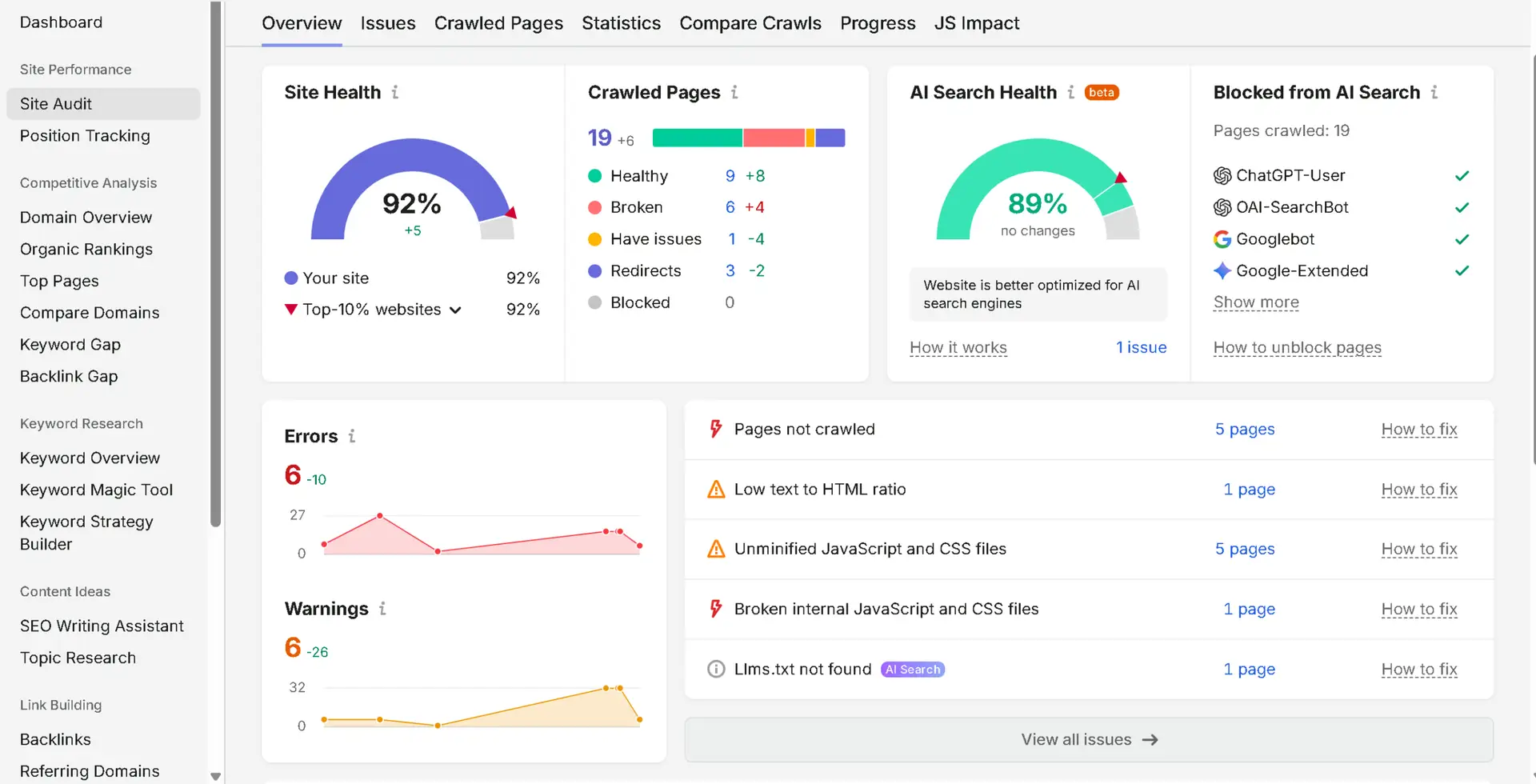
Earlier snapshot: 19 URLs crawled · 9 healthy · 6 broken · 1 with issues · 3 redirects · 0 blocked.
AI Search Health 89% · Errors 6 · Warnings 6.
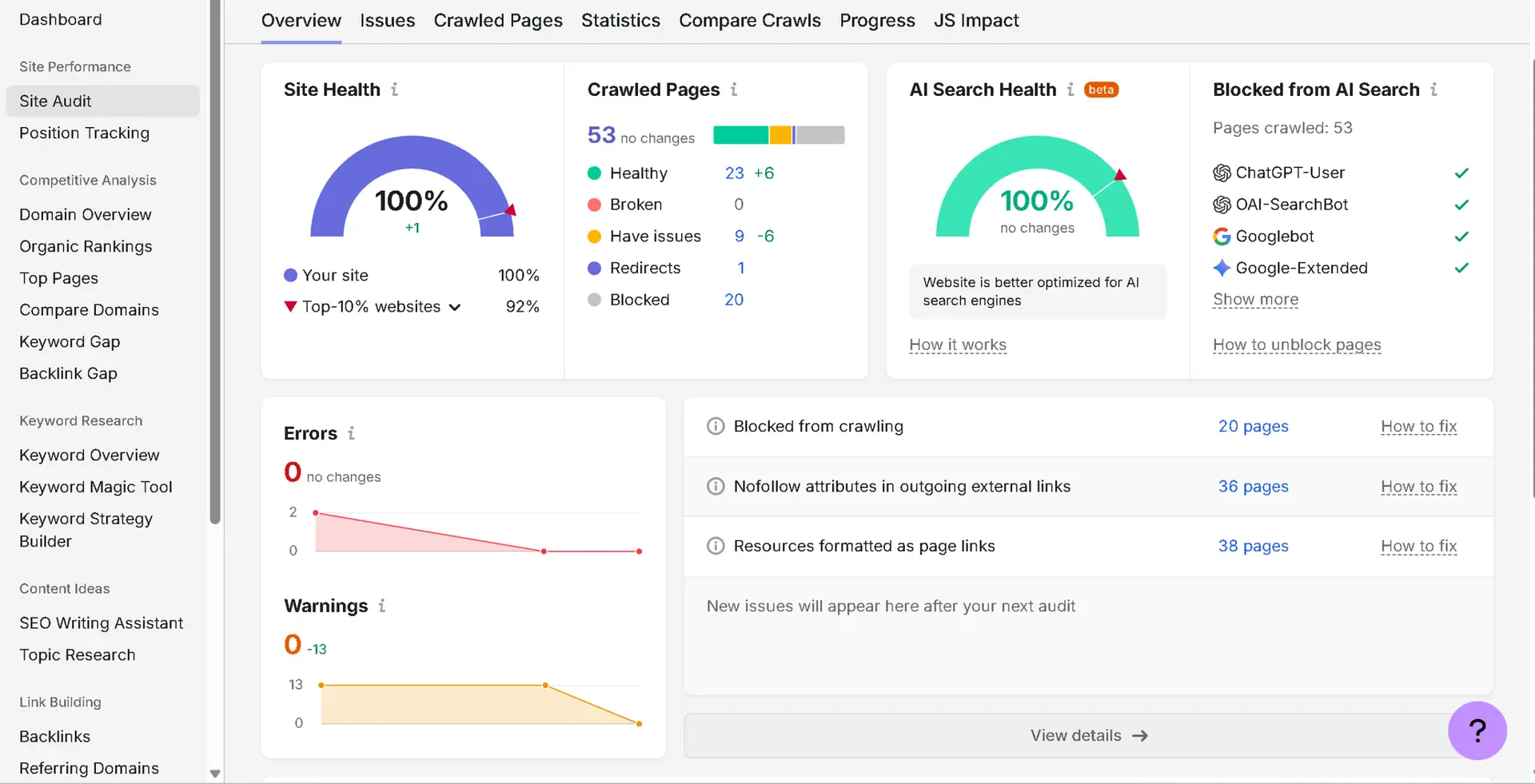
Latest snapshot: 53 URLs crawled · 23 healthy · 0 broken · 9 with issues · 1 redirect · 20 blocked.
AI Search Health 100% · Errors 0 · Warnings 0.
THE WORK
Mapped the supplied 53-URL CSV to the live WordPress store. The export identified 13 public pages with low text-to-HTML warnings, two slow-load flags, and separate notices for blocked URLs, external nofollow links and image resources. Each issue type was reviewed against the purpose of the page or link.
Updated seven product pages and six other public pages. Product buying guidance covered watch fit and materials, projector connections and resolution, sewing-machine fabric suitability, earbud compatibility and charging requirements. The Home, About, Contact, Shop, Track Order and Home & Kitchen pages received clearer store information, enquiry instructions and practical FAQs.
Unsupported trust claims were removed. The ultrasonic mosquito product description was revised to avoid promising protection that its advertised sound technology could not substantiate. Existing prices, product URLs, images and variation lists were preserved.
The header and footer logo were changed from the 800×800 image to the 400×400 version. File size fell from 106,040 to 35,073 bytes—about 67% less image data per logo file. The alt text was set to “MRL Bazaar”. This measures the image file reduction.
Account and product-tag noindex settings were retained where appropriate. Reviewed social sharing links and WooCommerce image-gallery links were also kept so those features continued to work.
Checked all 13 edited public URLs for their new content, a single H1 and index/follow directives. The six changed Elementor documents parsed correctly and retained their layout structure. Saved product types and the two variable products’ option lists were checked, and WordPress caches were purged.
The supplied After screenshot provides the reported audit outcome. The work record includes the original CSV, content snapshots and the public-page verification results.
REPORT CONTEXT
A 100% health score does not mean every row has disappeared. This screenshot still lists 20 blocked URLs, external nofollow notices on 36 URLs and resource-style links on 38 URLs. The original blocked list contained account/lost-password pages and product-tag archives; examples were checked and intentional noindex was retained.
Sharing links and gallery image links have useful functions. Their notice categories were reviewed alongside the visible audit result rather than removed just to change a counter.
Compare the scope before interpreting the score. The supplied reports cover different totals of crawled URLs. Read those totals and the recorded notices alongside the percentages. A wider crawl can include pages or resources that were absent from the earlier snapshot, so the counts should not be treated as a controlled measurement of one individual change. The screenshots document this campaign’s reported state and the accompanying notes explain the available work record.
Follow the visitor’s route through the store. Clear product guidance and accurate store information have a practical purpose: a reader should be able to understand the offer and find the appropriate next step. When reviewing a similar store, check an actual product page, its related information and the route towards an order. Use the business’s approved details to assess missing information. An audit score cannot substitute for checking those pages as a visitor.
Keep a separate follow-up record. The remaining notices and hosting-dependent checks belong in the handover even when the displayed Site Health reaches 100%. For a later review, retain the report date, crawler settings, affected URLs and the relevant live observations. Measure search traffic or sales separately if those are part of the business question. This preserves the distinction between completed website work, the campaign’s technical score and outcomes that were not measured here.
Measurement scope: The percentages describe the supplied Semrush campaign. Traffic, rankings, sales and a new mobile speed measurement were not part of this result. Earlier HTTP checks also found mixed cached responses for the www HSTS header; CDN-wide confirmation remains a separate hosting follow-up.
YOUR NEXT STEP
Share your website URL and the issue you want to solve. Start with an audit, an ordered action list and changes that can be checked on the live pages.
Questions about this case study? Leave a comment below.